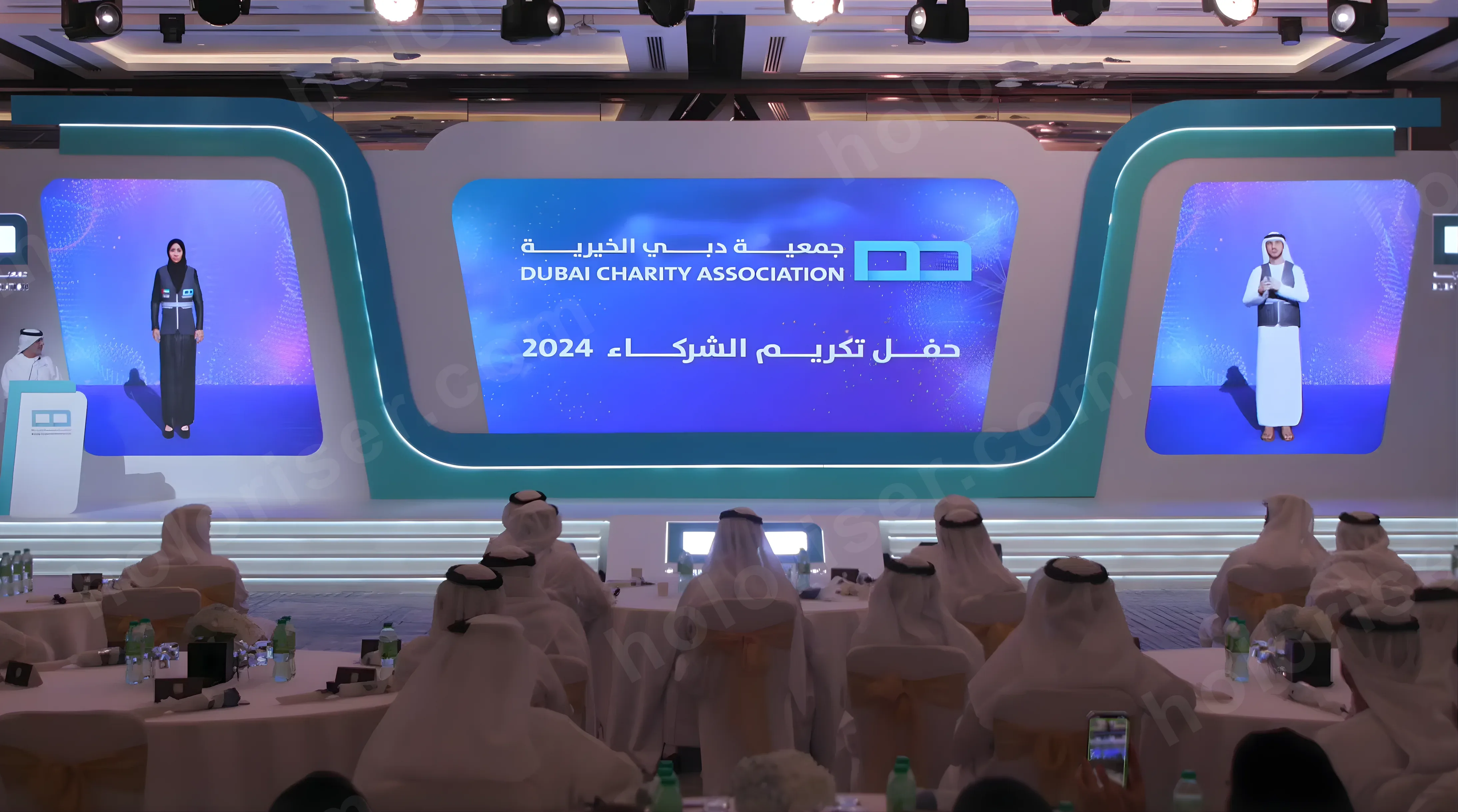
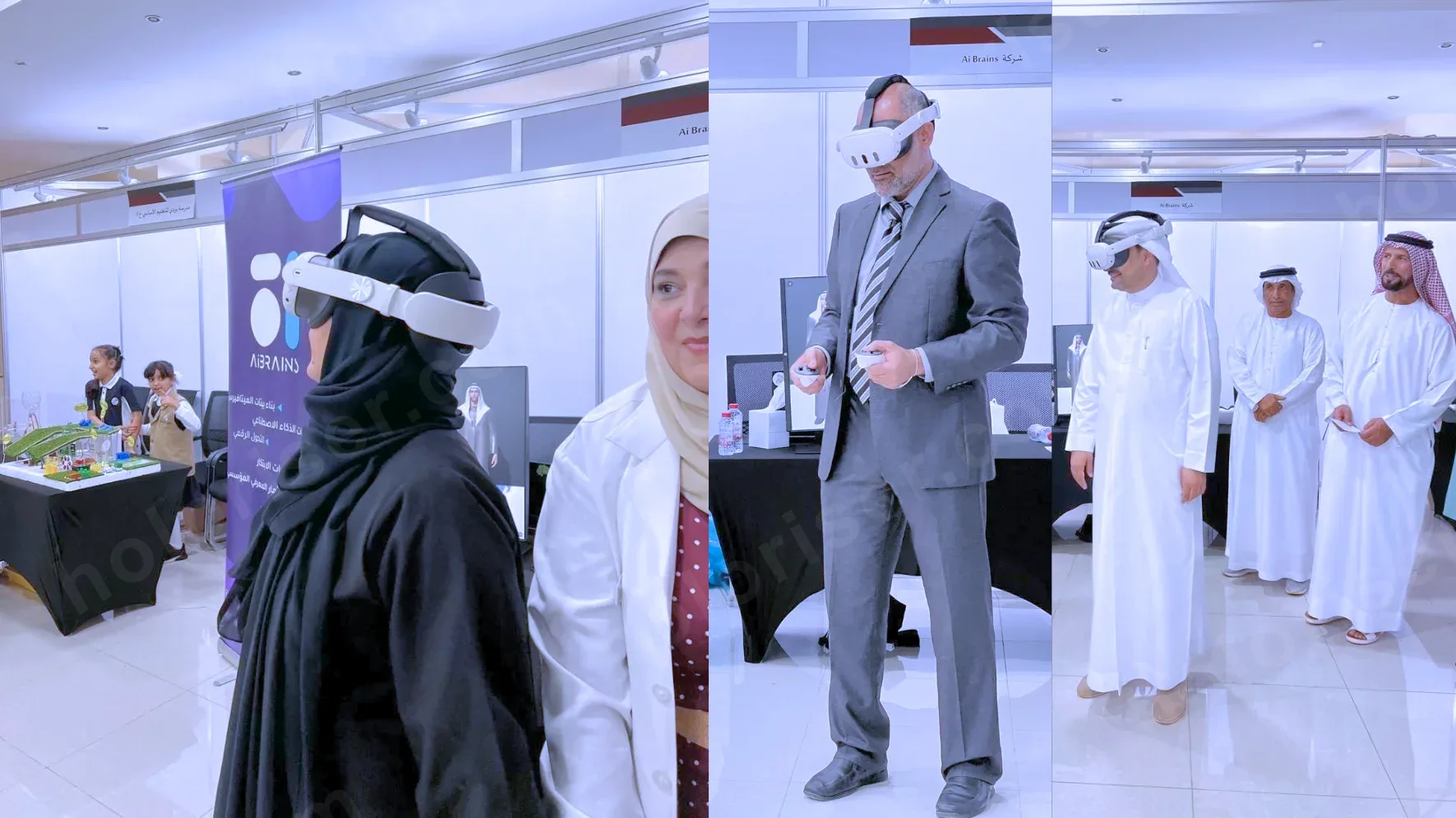
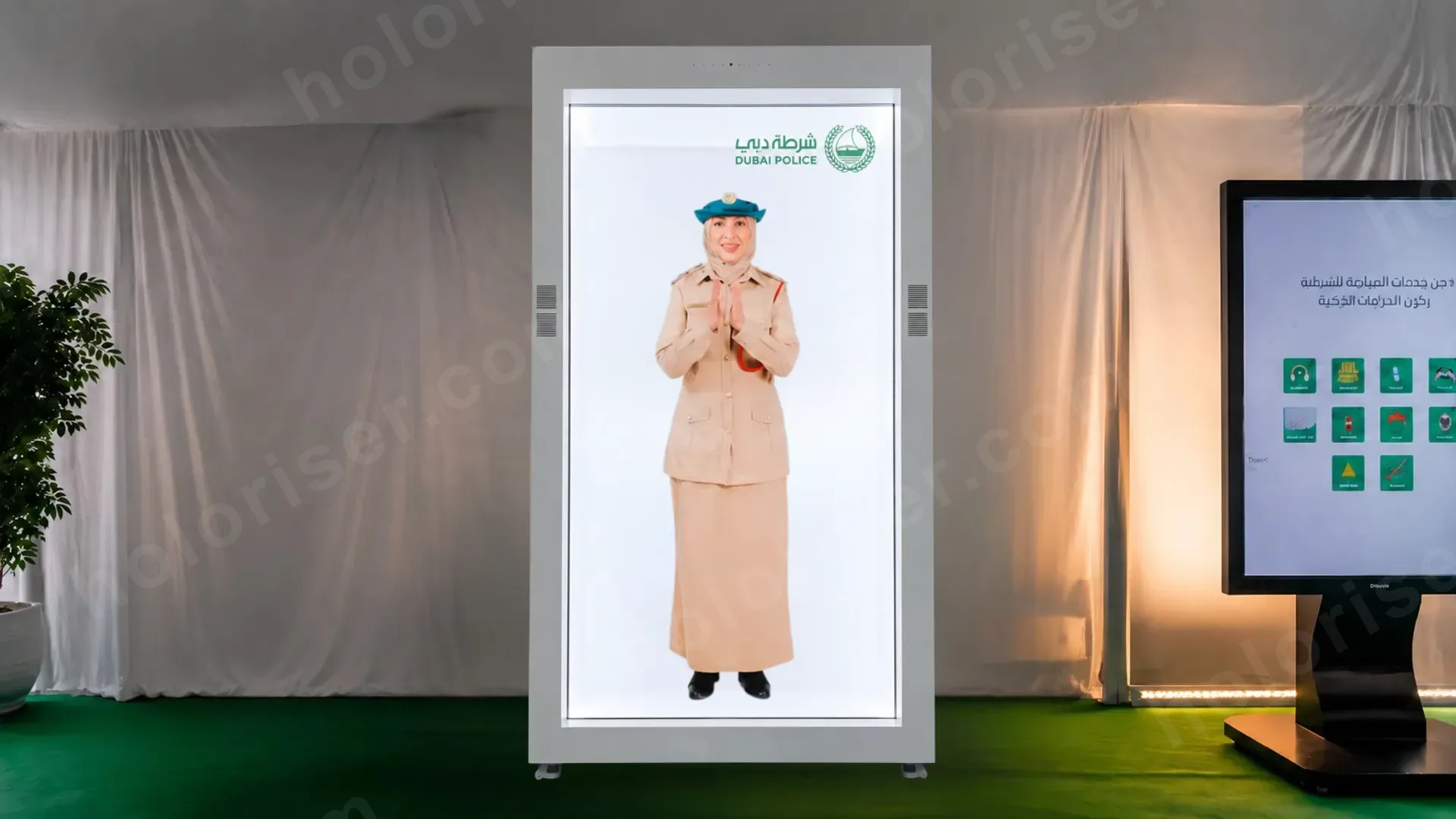
Why Holographic Displays Outperform LED Screens at UAE Exhibitions
Side-by-side, holographic activations pull more visitors, hold attention longer, and produce more shareable moments than LED video walls. Here is what we see at GITEX, ADIPEC, and Arab Health.
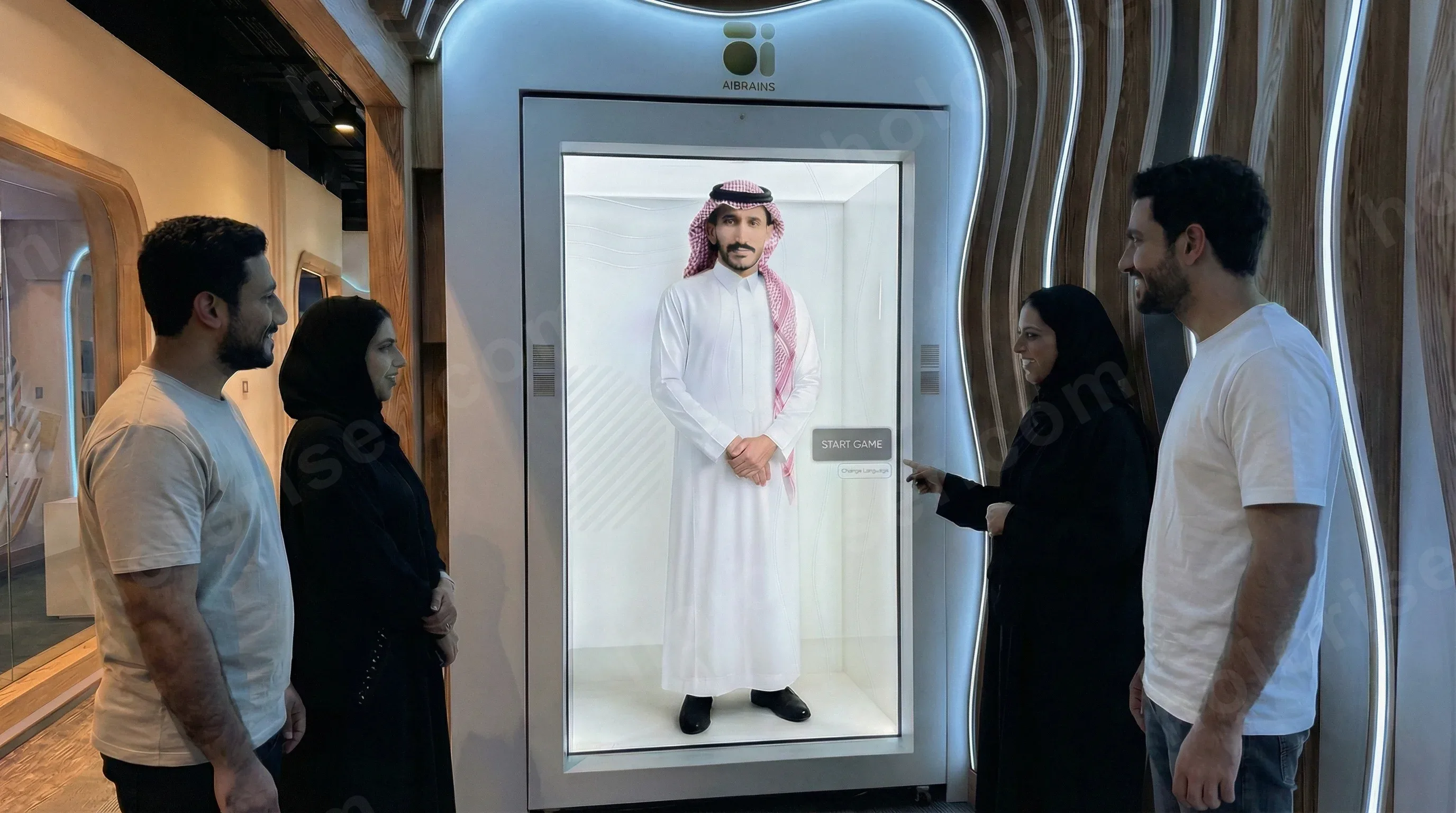
Walk the floor at GITEX, ADIPEC, or Arab Health and you will see the same thing on every stand: an LED video wall, sometimes a curved one, sometimes a giant one, almost always playing a 30-second loop nobody stops for.
The brands using holographic displays look different from across the hall. People stop, walk closer, take out their phones, and stay. That is not an opinion — it is the pattern we have measured on every activation we have run in the UAE for the last two years.
This post is the short version of why.
Flat content versus depth
An LED screen is a flat surface playing a video. The brain processes it the same way it processes any other screen — it is background visual noise unless the content is exceptional.
A holographic display creates the illusion of depth. The subject appears to occupy real 3D space in front of the viewer. The brain reads it as a thing in the room, not a video on a wall. That triggers a different attention response — closer to "what is that?" than "another ad."
This is why the foot traffic numbers are not even close.
What we see in the data
Across the activations we have run for clients in retail, government, and exhibitions, the pattern is consistent:
- Stop rate (percentage of passers-by who pause): 4–8x higher than a comparable LED screen.
- Dwell time (how long they stay): typically 2–3x longer.
- Photo capture rate: very high. People photograph holographic content because it looks different on camera too.
The third point matters more than people realise. A photo of an LED screen looks like a photo of a screen. A photo of a holographic activation looks like the future. That photo gets posted, and the campaign runs for free for another week.
Where the difference is biggest
Holographic displays out-pull LED in every venue we have tested, but the gap is largest in three environments:
Crowded exhibitions. When 200 brands are all running LED loops, looking different is the entire game. A holographic display does that without needing a louder pitch or a bigger booth.
Premium retail. Luxury brands cannot use the same visual language as a phone shop in a mid-tier mall. Holographic content reads as premium because it is rare, technical, and visually unfamiliar — the same reasons people stop to look at it.
Government and cultural campaigns. National-day storytelling, museum installations, and cultural communications benefit from the emotional weight of holographic presence. A holographic Emirati elder telling a heritage story lands differently than the same story on a screen.
Where LED still wins
Holographic is not a replacement for everything. LED video walls are the right tool when:
- You need very large surface coverage (a stadium-sized backdrop).
- The content is genuinely flat (live camera feeds, scoreboards, simple branded loops).
- The viewing distance is far — beyond about 6–8 metres, the depth illusion of most holographic displays starts to flatten.
A lot of our larger activations actually pair the two: a holographic centerpiece for the moment people remember, plus LED for scale.
What this means for planning a Dubai campaign
If you are budgeting for a launch, exhibition, or activation in the UAE in 2026, the question is not "LED or holographic." It is "where does each one earn its place in the campaign."
For us, the rule of thumb is simple: holographic for the moment people will remember and photograph; LED for surface area, scale, and live content.
If you are scoping something specific, tell us about the campaign and we will come back with a concept and a quote.