3D Projection Mapping
Transform Any Surface into a Visual Canvas
Turn buildings, stages, and objects into dynamic displays with precision-mapped projections that bring surfaces to life with stunning visual storytelling. Often used alongside drone shows in the sky and stage holograms on the platform for layered productions.
Mapping Capabilities
Cutting-edge projection mapping technology
Building & Facade Mapping
Transform entire buildings into dynamic canvases with precision-mapped projections.
Object Mapping
Bring products and objects to life with perfectly aligned projections on any shape.
Multi-Surface Projection
Project onto multiple surfaces simultaneously for immersive environments.
Interactive Installations
Create responsive projections that react to touch, motion, and sound.
Live Event Integration
Seamlessly integrate with live performances, presentations, and broadcasts.
Custom Content Creation
Our creative team designs stunning visual content tailored to your brand.
Our Process
From site survey to showtime
Site Survey
Analyze surfaces and environment
Content Design
Create custom visual content
Technical Setup
Projector placement and mapping
Show Delivery
Execute and manage the experience
Perfect For
Versatile applications across industries
Building Facades
Transform landmarks, hotels, and corporate buildings into stunning visual displays.
Stage Productions
Create immersive backdrops and visual effects for concerts, theater, and live events.
Product Launches
Reveal products in spectacular fashion with dynamic projection storytelling.
Museums & Exhibitions
Bring history and art to life with interactive and educational projections.
Retail Activations
Create memorable in-store experiences that drive engagement and sales.
Special Events
Weddings, galas, and celebrations transformed with magical visual atmospheres.
Technical Capabilities
Professional-grade projection systems
Related Case Studies
Projects we have delivered for clients across the UAE
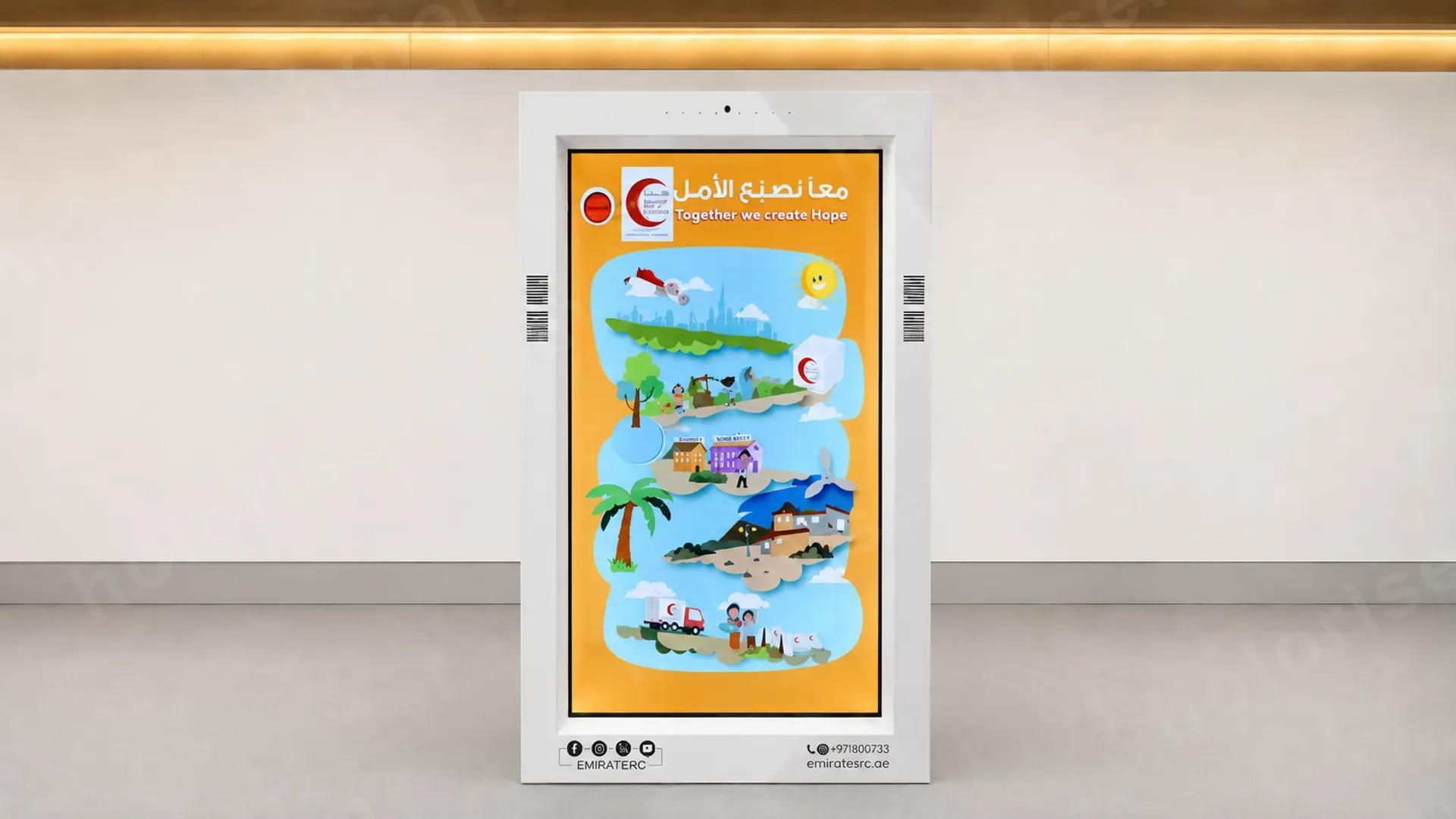
Smart Interactive Donation Box
A smart donation box for the UAE Red Crescent that shows the impact of each gift. After donating, an animated journey follows a coin lighting up homes, helping dig wells and bringing joy to schoolchildren.
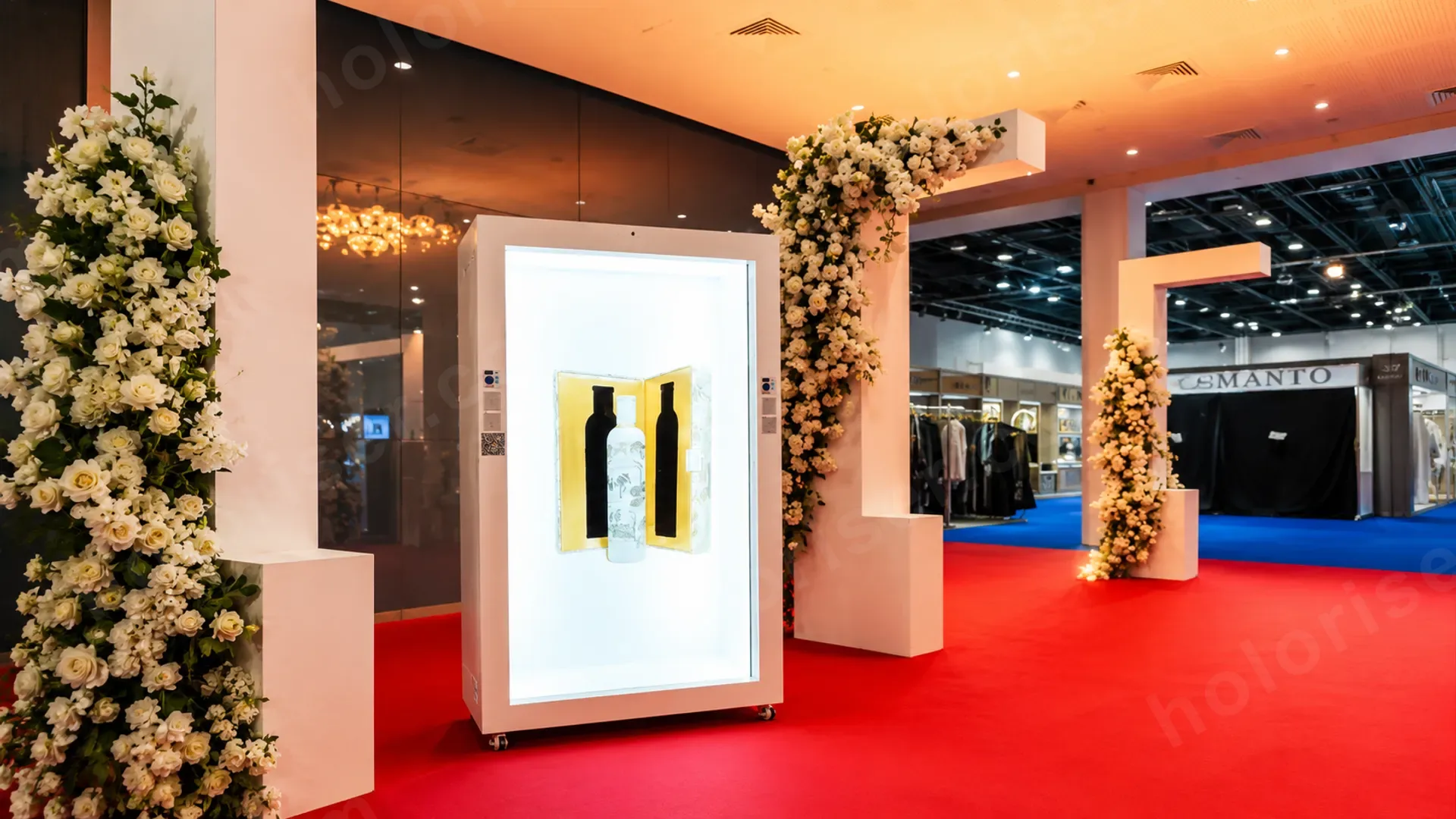
3D Product Showcase on Holobox
At the Bride Show in Abu Dhabi we displayed 80+ products from perfume, jewellery, watches, gold, fashion and cosmetics brands as 360° 3D models inside Holobox, giving visitors a clearer way to inspect each item.
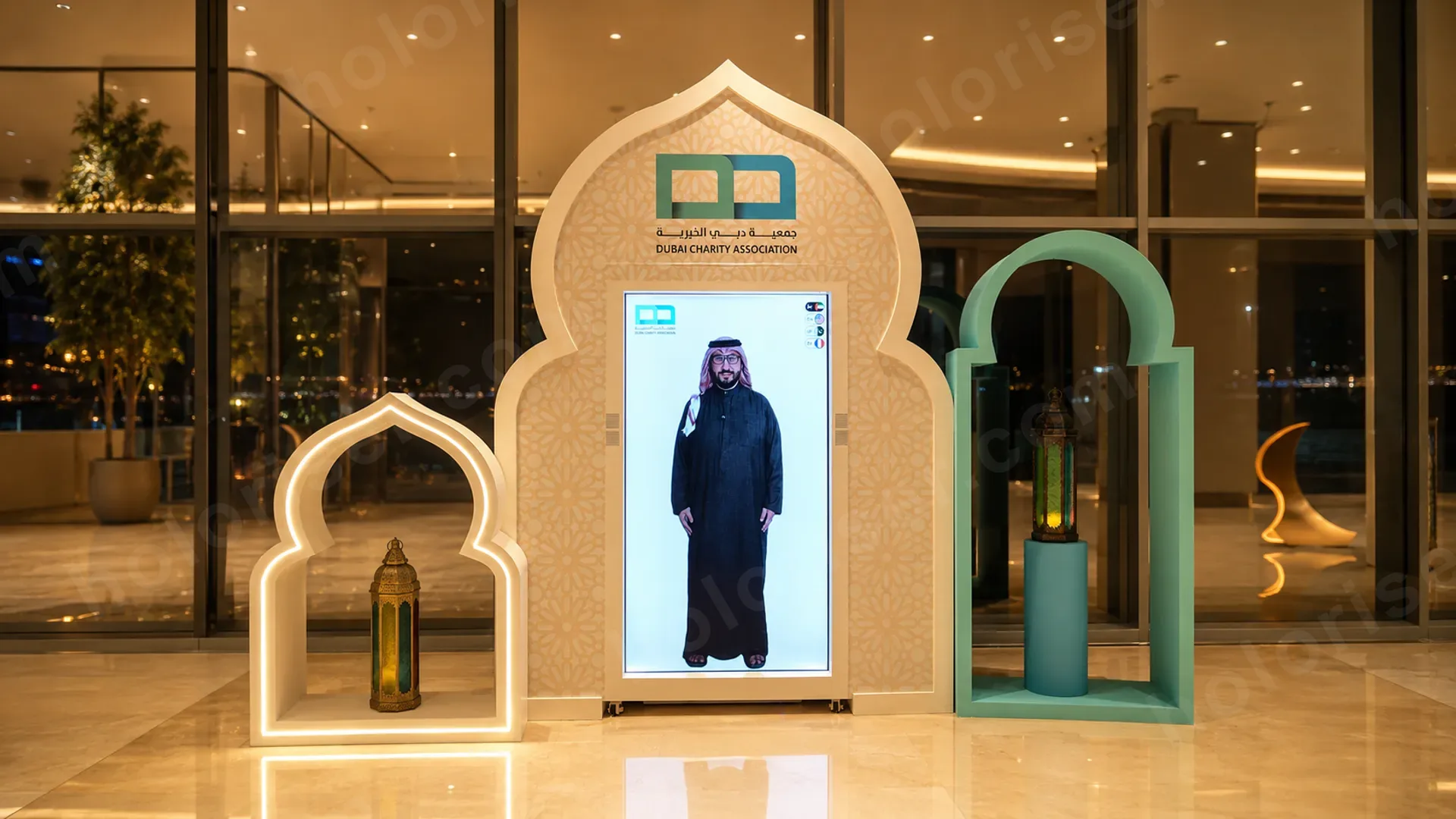
Abdullah — Interactive Donation Assistant
An interactive donation experience on Holobox where a virtual employee named Abdullah welcomes users, walks them through the donation channels and payment, then thanks them once they're done.
Frequently Asked Questions
Common questions we get from clients
What surfaces can you project onto?
Pretty much anything that holds still and reflects light: building facades, stages, vehicles, statues, cakes, scale models. Curved and irregular shapes are fine — that's the whole point of mapping. Glossy or very dark surfaces are harder, but we can usually solve them with surface treatment or a higher-lumen projector.
Does projection mapping work outdoors?
Yes, but ambient light is the constraint. After dusk, outdoor mapping is straightforward and looks great on building facades. During the day, you'd need extreme-brightness projectors and the result is muted.
How long does setup take?
A small object-mapping setup can be done in a few hours. A full building facade with multiple stacked projectors usually takes a full day for rigging and another half-day for calibration and rehearsal. We always plan in extra contingency time on the install schedule because surveying real-world surfaces always surprises you a little.
Can I update content after the launch?
Yes. Once the mapping is calibrated, you can swap in new content as long as it matches the mapped geometry. Many clients run different content for different occasions on the same facade. We deliver playback files plus a content management workflow so your team can schedule and rotate clips.
How is content created?
The typical pipeline:
- 3D site survey to capture the surface as a model
- Storyboard and creative direction
- Animation and rendering against the model
- On-site projector calibration to match render to reality
- Tech rehearsal with audio and cues, then show
What's the difference between projection mapping and a standard video projector?
A regular projector throws a flat rectangular image. Projection mapping warps the image so it lines up with the actual surface — windows, columns, sculpted details — so the surface itself becomes the canvas. It needs accurate site geometry, edge-blending across multiple projectors, and content built specifically for that geometry.
How is this different from a Holobox?
Both create visual presence, but the use cases are different. Projection mapping is best for large-scale, site-specific shows on buildings, stages, or objects. A Holobox is a self-contained transparent unit for close-range engagement in lobbies, booths, and reception areas. Many clients use both together: mapping for the wow moment, Holobox for the conversation afterward.
Ready to transform any surface?
Let's create a stunning projection mapping experience.