When AR and VR Earn Their Place on a Dubai Exhibition Stand
A VR headset serves one visitor at a time. Here is the throughput math, when phone AR works better, and when a device-free display wins the aisle.
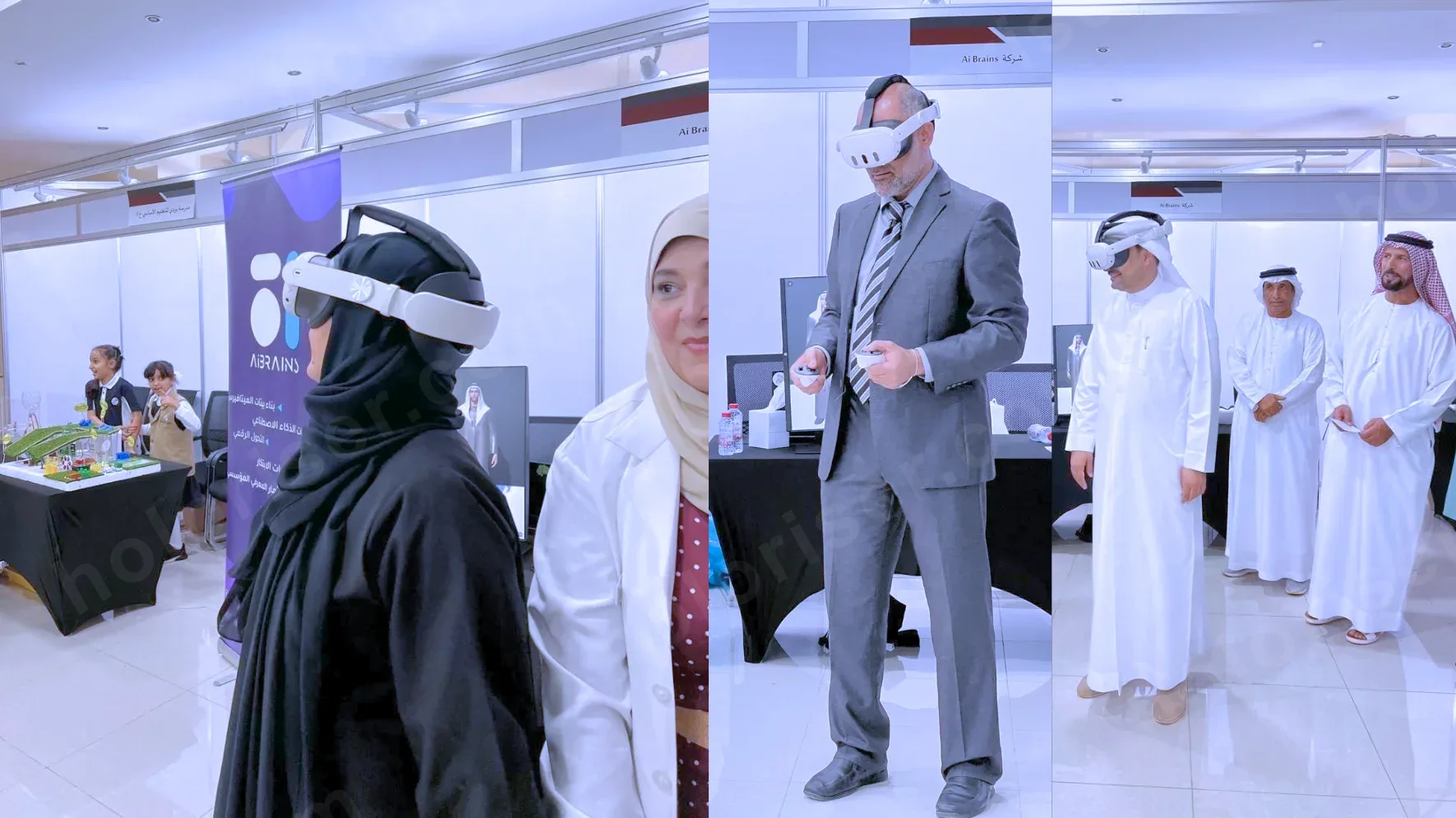
Every exhibition season we get a version of the same brief. The client saw a VR demo at a conference somewhere, the budget is approved, and they want two headsets on the stand at GITEX or Gulfood.
Sometimes that is the right build. Often it is an expensive way to entertain eleven people an hour.
Here is how we decide, and what we tell clients when the answer is no.
Run the throughput numbers before you sign anything
A VR headset serves one person at a time. That single constraint drives everything else.
Time a full cycle on a real stand:
- 40 to 60 seconds to seat the headset, adjust the strap, set the lens spacing, hand over the controllers
- 20 seconds of "look around, now press this"
- two to four minutes of actual content
- 30 seconds to take it off, wipe the lenses, swap the face cover
Call it five minutes per visitor when the staff member is quick and the visitor cooperates. Neither is guaranteed. Across an eight-hour show day with breaks and a couple of resets, one headset moves 60 to 80 people. Two headsets and one supervisor move fewer than you would expect, because the supervisor becomes the bottleneck the moment both units are in use.
Now compare that with the hall. The aisle outside your stand moves in thousands. Your headset moves in dozens.
That is not an argument against VR. It is an argument against buying VR to solve a footfall problem.
The costs that never appear on the equipment line
Floor space. A standing VR bay wants a clear circle of roughly two metres, plus somewhere for the visitor to put their bag. On a 12 sqm shell scheme, you have given a third of the stand to one person at a time.
A dedicated person. Someone fits the headset, watches that the visitor does not walk into a wall, resets the scene, and cleans between users. That person is not qualifying leads while they do it.
Hygiene. Silicone face covers, wipes, and a cleaning routine visitors can see. People in the Gulf notice this. If they watch you clean the unit, most will still put it on. If they do not see you clean it, plenty decline politely and keep walking.
Onboarding drop-off. Every second between "yes, I'll try it" and "I am inside the experience" costs you people. Anyone standing third in a queue with 400 other stands left to see will leave.
Where a headset genuinely wins
VR pays off when the value per visitor is high and the number of visitors is small and known in advance. The strong cases we keep seeing:
- A refinery, a substation, or a production line you cannot physically bring into Dubai World Trade Centre
- A tower that has not been built yet, walked at full scale by an investor who will not accept a render
- A safety or training scenario a procurement committee needs to feel before it signs
- A vehicle or machine interior where the entire selling point is what it is like from inside
In those cases you book the slot. Name on a list, 15 minutes, the technical lead from the buying side rather than the intern who wanted a go. One good session with a decision-maker beats 200 people who rode a branded rollercoaster and forgot the logo by lunch.
That is the side of the work we scope under AR and VR production, and the conversation always starts with the guest list, not the hardware.
Phone AR scales, but it needs a selfish reason
Markerless AR on the visitor's own phone removes the throughput ceiling. No hardware, no queue, nothing to sanitise, any number of people at once. It brings a different failure mode instead: nobody opens it.
Count the steps between an interested visitor and a working AR experience. Notice the prompt. Take out the phone. Open the camera and scan. Wait for a page to load on congested hall wifi. Grant camera permission. Hold the phone up in a crowded aisle and move it around.
You lose people at every one of those. So the payoff has to be worth six steps, and it has to be something the visitor wants for themselves: a photo worth sending to a colleague, a spec and price sheet tied to the exact unit they are standing beside, a prize entry attached to their badge.
Two practical notes from halls we have worked in. Markerless tracking drifts on polished exhibition flooring with almost no visual features, so test on the actual carpet rather than your office floor. And phone AR usually earns more after the show than during it, because the visitor still has the link on the flight home while your stand is being packed into a crate.
The aisle problem neither one solves
AR and VR share a weakness that matters more in an exhibition hall than anywhere else. They are private experiences. The person inside the headset is having a great time. The four people watching see someone waving at nothing.
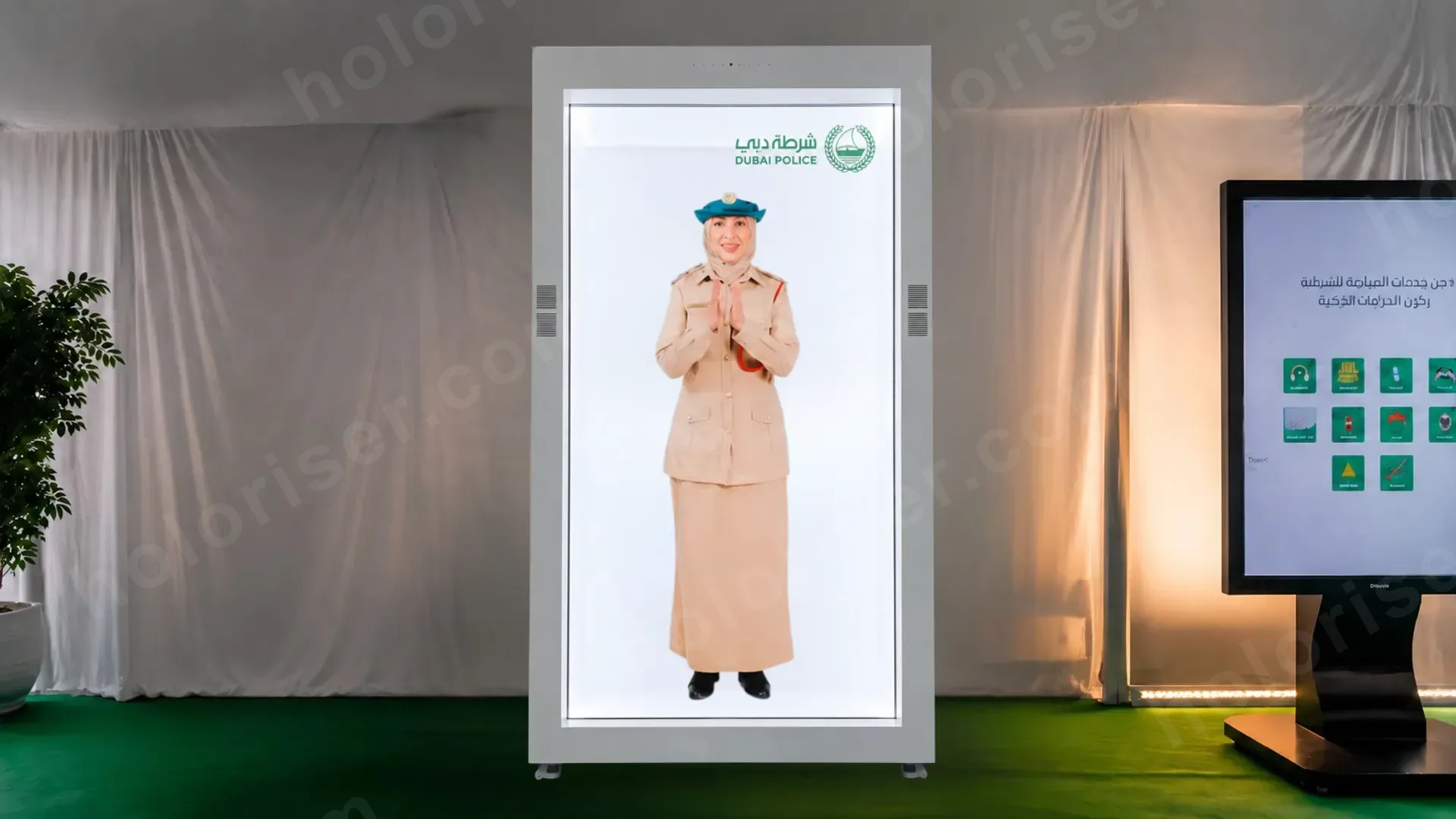
A holographic display works the other way round. Nothing to wear, nothing to install, nothing to queue for. Someone walking past at three metres receives the content whether or not they choose to engage, and a group can watch the same thing together.
Two of ours, both built for exhibitions:
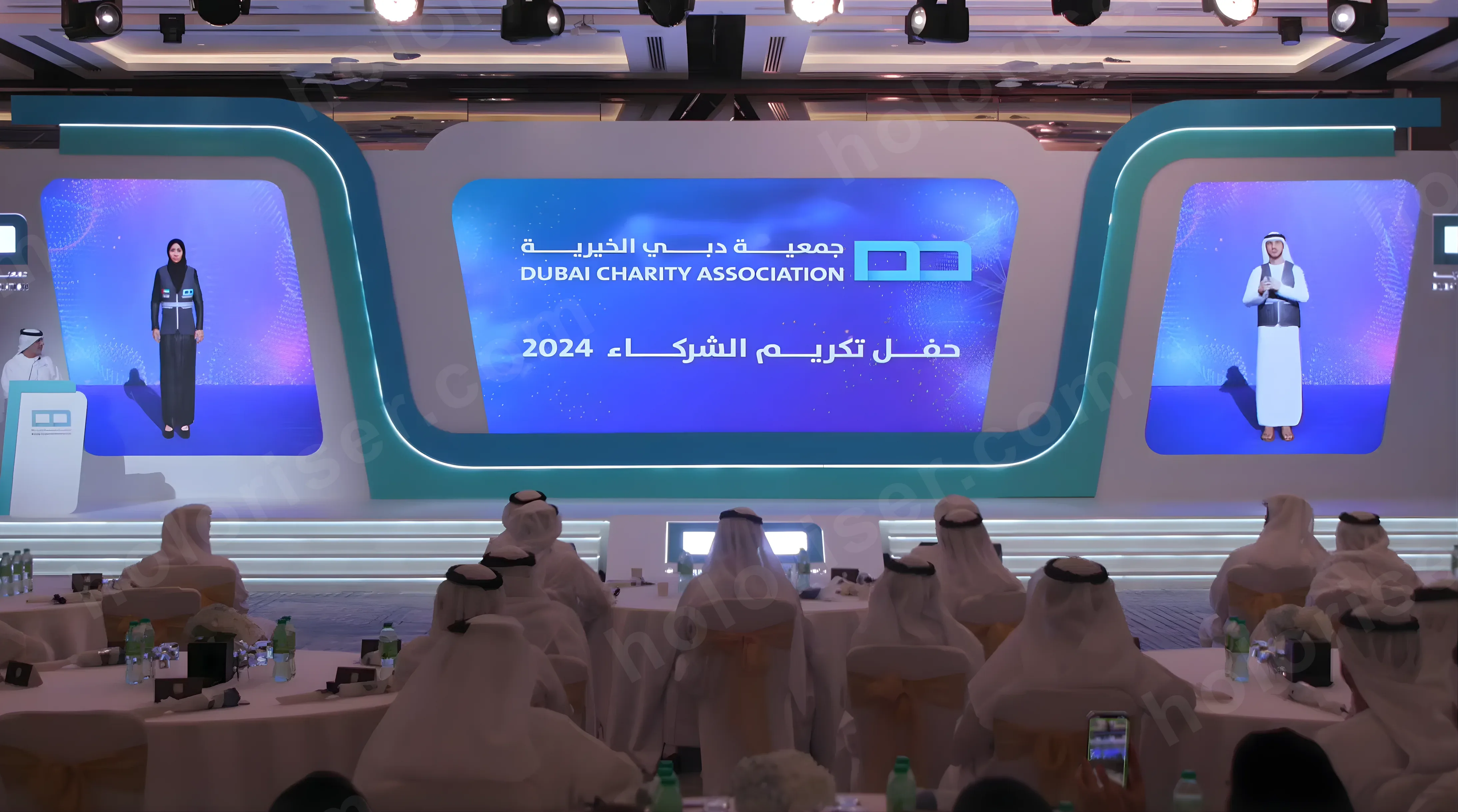
For Fujairah Digital Government at GITEX 2025 we built a bilingual quiz with a realistic virtual host on an 86" Holobox. The host was made from footage of one of the entity's own employees. She welcomes visitors, asks the questions in Arabic and English, and gives each participant their result. The client's team writes and approves questions from an admin screen before they go live. One visitor plays. Everyone in the aisle watches. The full project notes are here.
At SHRM MENA 25 in Dubai we ran the same structure with a 3D character of the Saudi figure Khalid Al-Harbi in full Saudi dress. He opens the experience, runs the Q&A, then comes back to congratulate the winners. Getting the cultural detail right did more for that stand than any hardware spec would have.
Neither of those needs a headset, a phone, or a spare staff member.
The rule we actually use
Write down what the stand has to achieve first. Then pick the tool.
Maximum reach across the hall. A device-free display in the aisle. That is what Holobox and large-format visual builds are for.
Eight named people you have to convince. Book VR slots, staff them properly, and accept that the throughput is meant to be low.
A conversation that survives past the closing bell. Phone AR with something the visitor keeps.
All of the above. Put the device-free display at the front to hold the aisle, and the headset in a quiet corner behind it for appointments only. Most well-run stands in Dubai end up in this shape.
The mistake is buying the headset first and writing the objective around it afterwards. That is how a stand ends with 60 delighted visitors and no pipeline.
If you are planning for the 2026 season, we design the whole stand around whichever of these is doing the work, and the rest of that toolkit sits under exhibition visual technology. Send us the brief and we will tell you plainly if VR is wrong for it.