How Far Ahead You Need to Book a Drone Light Show in Dubai
Airspace clearance, not choreography, decides whether a drone show fits your event date. Here is how the approval chain, the site survey and battery limits set your timeline.
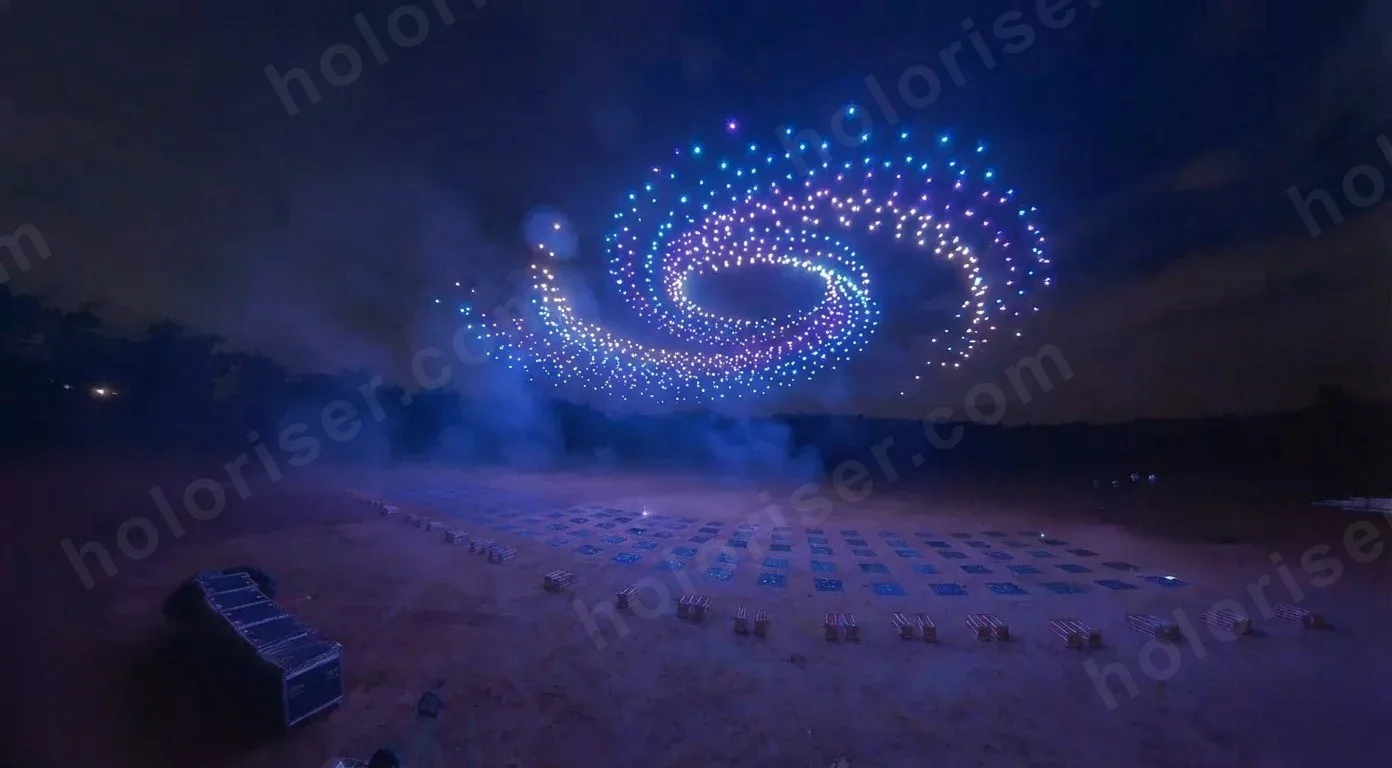
The brief usually arrives fully formed. A beachfront site in Dubai, six weeks out, six hundred drones, eight minutes in the air, the logo written in the sky at the end. The only open question, apparently, is whether we can build it.
Building it is rarely the constraint. The airspace is, and it is the first thing to check when you are working out whether a drone show fits your date.
The approval is a chain, not a form
Nobody hands you a single drone show permit. You are assembling a set of consents that have to line up in order:
- The operator holds an authorisation to fly a fleet at all. That exists before your event does, and if your supplier does not already hold one, the timeline is dead on arrival.
- The site owner grants permission to use the ground, including a launch and recovery area you can fence off and guard.
- The event gets its permit from the authority that licenses events in that emirate, with the drone flight described inside it.
- The flight gets clearance for a defined block of sky: fixed coordinates, a ceiling, a start and end time on a named date, and a stated fleet size.
- Police and event security review the crowd plan, and they ask their own questions about the launch area.
The aviation clearance is normally the last one to close and the one you have the least ability to hurry. Reviewers look at where your box of sky sits relative to controlled airspace, approach and departure corridors, coastal helicopter routes, and whatever else is already booked over that area that night. Two sites fifteen minutes apart by car can come back with very different answers.
The order is what hurts schedules. The aviation submission needs the site permission and the flight geometry already settled, so anything that slips earlier in the chain pushes the slowest step back by exactly the same amount.
Work backwards from the show date, not forward from today
Put the show date on the right of the page and move left.
Before the show sits a rehearsal or test flight, which may need its own clearance and its own night on site. Before that, the fleet has to be in the country, and shipped-in drones mean lithium batteries as regulated air cargo, with a customs clock of their own. Before that, the submission goes in with locked coordinates. Before that, the flight design has to be finished, because those coordinates are the show. And before all of it, the client signs off the creative.
That last line is where most timelines break. The creative has to be finished before the paperwork starts. When marketing changes the logo reveal three weeks out and the formation now needs another forty metres of altitude, you are not editing a video file. You are editing a document that has already been reviewed.
How much runway you need depends on the site far more than on the show. A desert plot with nothing around it is a different review from a beach a few kilometres off an approach path. Ask your operator what they have flown near your exact spot and how long that approval took. A real precedent beats any general estimate, including one from us.
The site survey decides more than the brief does
Walk the site at night, at roughly the hour the show will run. Five things you learn there and nowhere else:
The launch grid is bigger than clients expect. A few hundred drones need a flat, spaced-out area measured in hundreds of square metres, closed to the public well before the audience arrives.
The audience cannot stand under the flight. A separation sits between the flight area and the crowd, so the viewing position you pictured may move backwards, and the F&B, the stage, the VIP seating and the camera platform move with it.
A drone show has a front. Formations read along one axis. Ninety degrees off it, a logo collapses into a line. Choose the hero viewing position before the flight design starts, then put the VIP area and the broadcast camera on it.
Glass and steel confuse positioning. Tall reflective towers cause GPS multipath, so base station placement and launch point matter more downtown than they do on open ground.
A crowd is an RF problem. Ten thousand phones saturate the same bands your control link and telemetry use. That belongs in the survey, not in the last hour before launch.
Wind, dust and who calls the abort
Wind limits apply at flight altitude, not at the height of your face. A pleasant evening at ground level can sit well above the limit a hundred metres up, and between towers you get funnelling that does not exist fifty metres away.
Visibility is a separate judgment. A shamal that lifts dust can leave the fleet legal to fly and the show invisible, which is the harder conversation. The calendar shapes the rest: the winter event season carries the rain risk, and summer brings heat that shortens battery life on a night still in the high thirties at nine o'clock.
Settle four points before you sign:
- Who has authority to abort, and at what point in the countdown.
- What happens to the fee when the abort is a weather call.
- Whether there is a reserve slot, and whether the site and the audience can actually be there for it.
- What the audience is told, and by whom.
The abort call belongs to the flight crew. Build a run of show that survives losing the drone segment, because nobody will override a safety decision for a sponsor moment.
Show length is a battery budget
Endurance in show configuration is measured in minutes, and the clock does not start when the audience sees the first formation. Takeoff, the climb to altitude, the descent and the landing all come out of the same charge.
So the fifteen-minute drone show in the client's deck is usually not one flight. It is two waves, or a battery swap between segments, which needs a second ground crew and a gap in the run of show that somebody has to fill.
Fleet size works like resolution. Each drone is a pixel in the sky. A couple of hundred will hold a clean shape and a short word. Fine detail in a logo, readable from several hundred metres back, needs a great deal more, and doubling the count doubles the launch footprint, the charging, the crew and the review attention. On most budgets a shorter show on a well chosen viewing axis beats a bigger fleet on a compromised site. That trade runs through nearly every drone show brief that reaches us.
The show is eight minutes. The event is four hours.
The drone segment lands at one point in the evening. The rest of the night still has to hold people, and that is usually where the sponsor's own content lives.
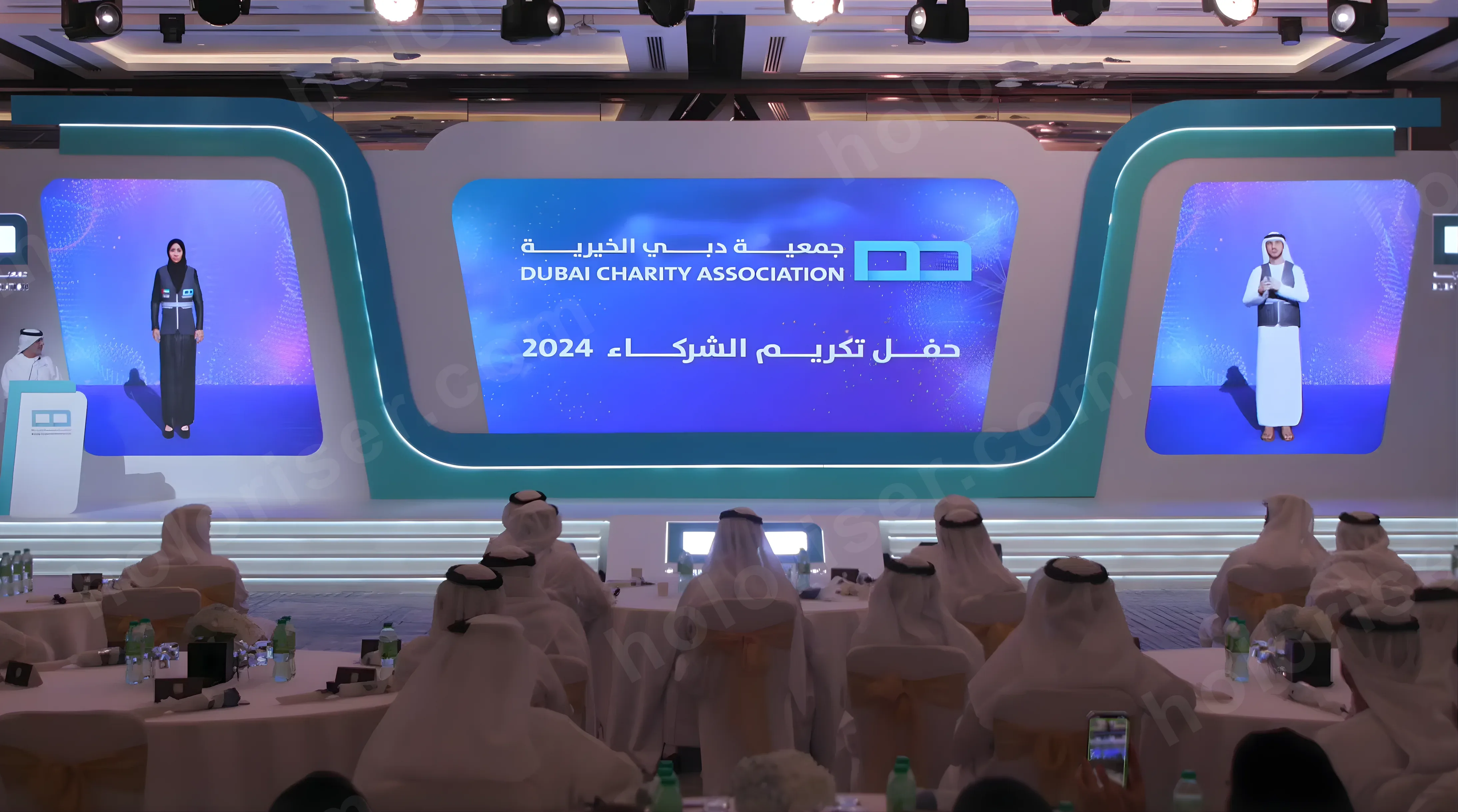
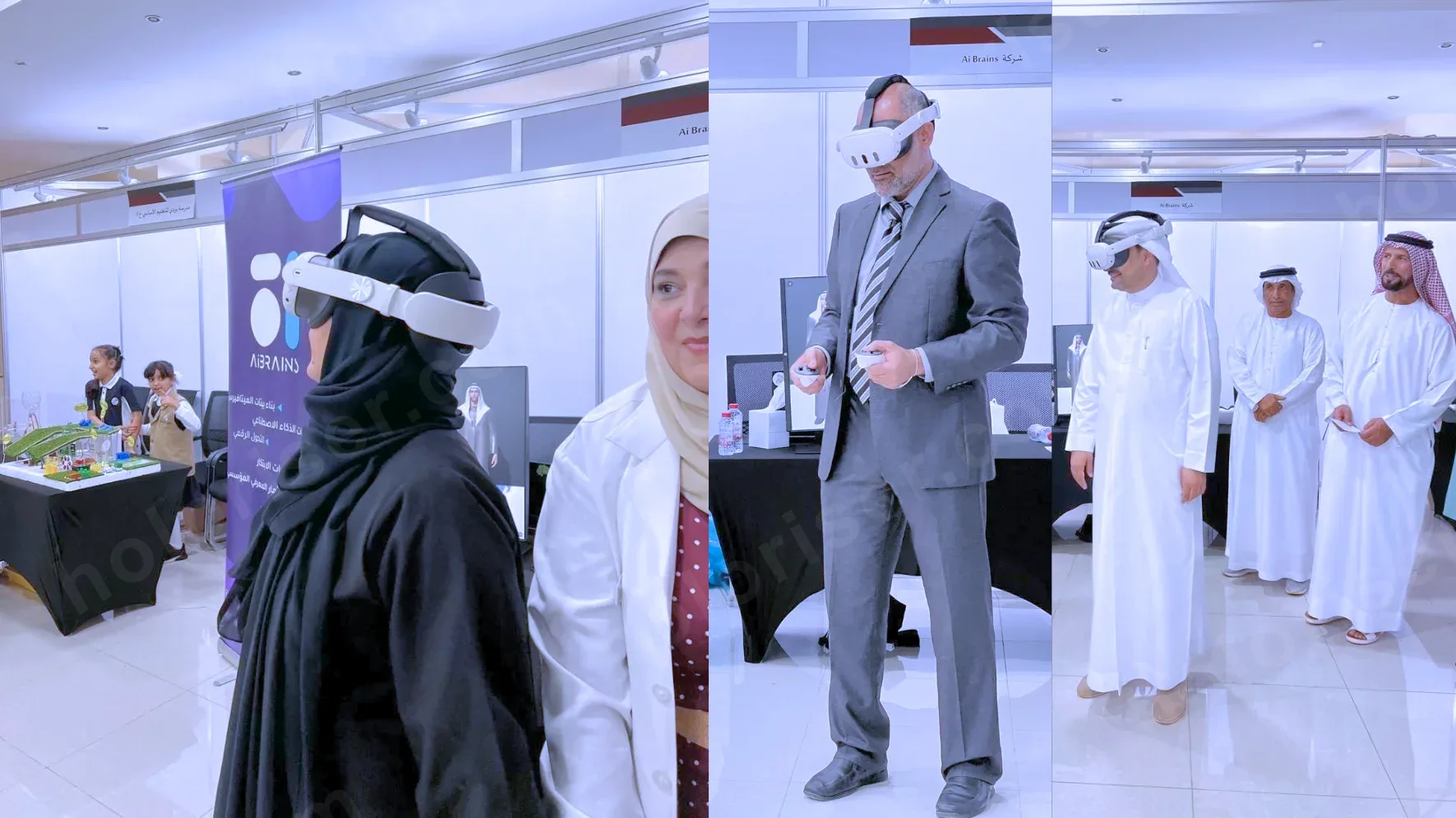
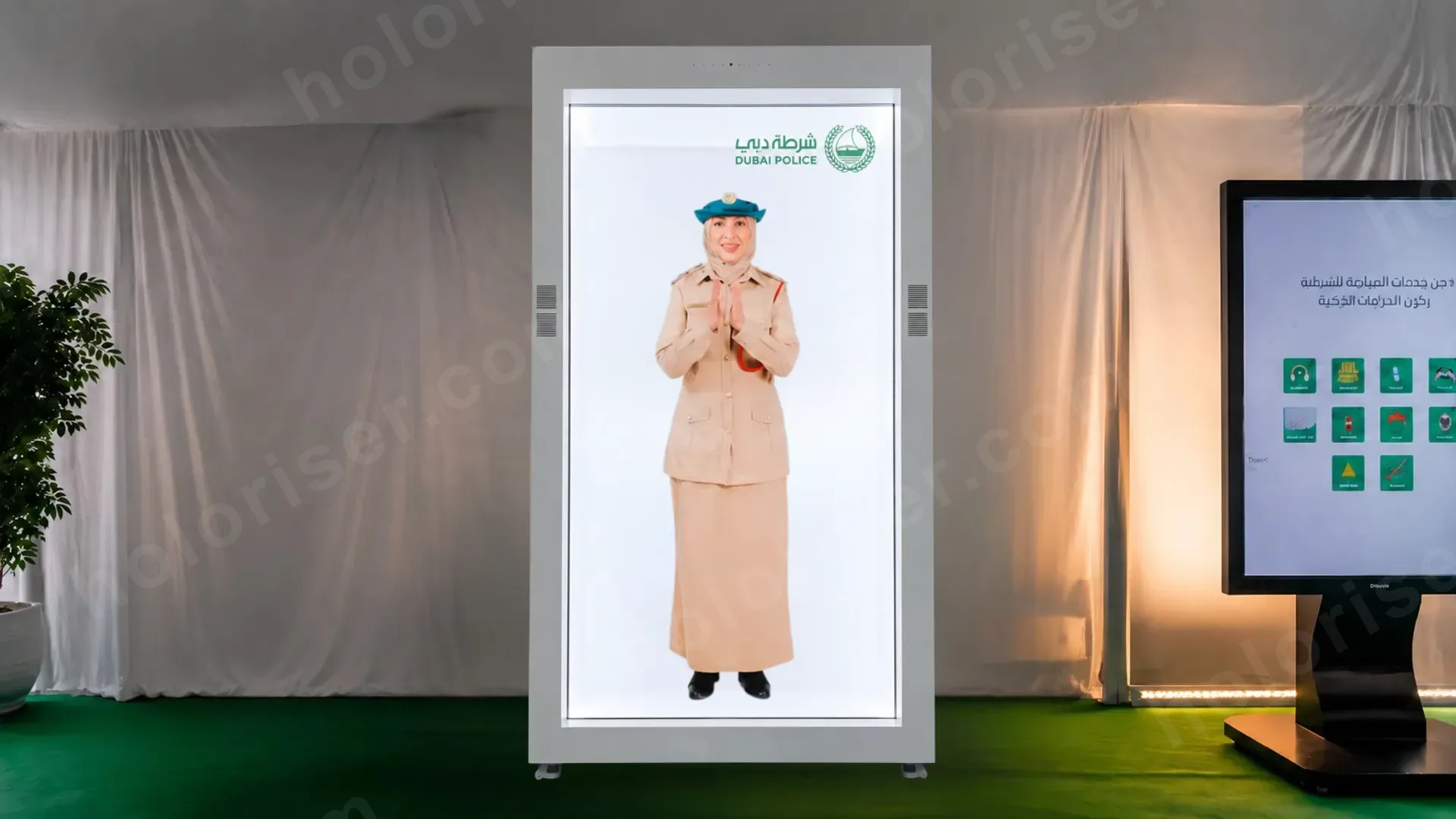
We see the same pattern at both ends of the scale. For Dubai Police we ran a safety quiz led by a virtual officer on Holobox at a public cycling event, where the crowd was outdoors and on site long before anything started. For Fujairah Digital Government at GITEX 2025 it took a different shape: a bilingual quiz run by a virtual host on an 86" Holobox, giving a busy stand something visitors would queue for. At SHRM MENA 25 in Dubai, a realistic 3D character ran the Q&A and congratulated the winners.
Those activations hold attention during the hours when nothing is in the sky. If you are planning a whole evening rather than one segment, start with our work across events.
What to send if you are scoping one
Four things get you a straight answer quickly: the date and whether it can move, the exact site as coordinates rather than an emirate, where the audience and the cameras will sit, and what the show has to say at the end.
With that we can tell you whether the timeline is realistic before anyone spends money on choreography. If the answer is no for your date, we will say so and tell you what else fits the slot. Send us the date and the site and we will come back with a straight read.