Life-Size Human Hologram in Dubai: Filmed or 3D Character?
Four ways to show a life-size person on a Holobox in Dubai: filmed video, a live stream, a virtual double or a 3D character, and which one to pick.
When a client asks us for "a life-size hologram of a person", our first question is: do you want visitors to see one specific real person, or do you want a person who talks to them?
The answer decides how it's built, the budget, and what you can change after launch.
This is a practical guide to the four ways we show a person at life size in Dubai and across the UAE, and when each one fits.
What does "life-size" actually mean?
It means the person stands in front of the visitor at roughly their real height, at eye level, not on a small screen.
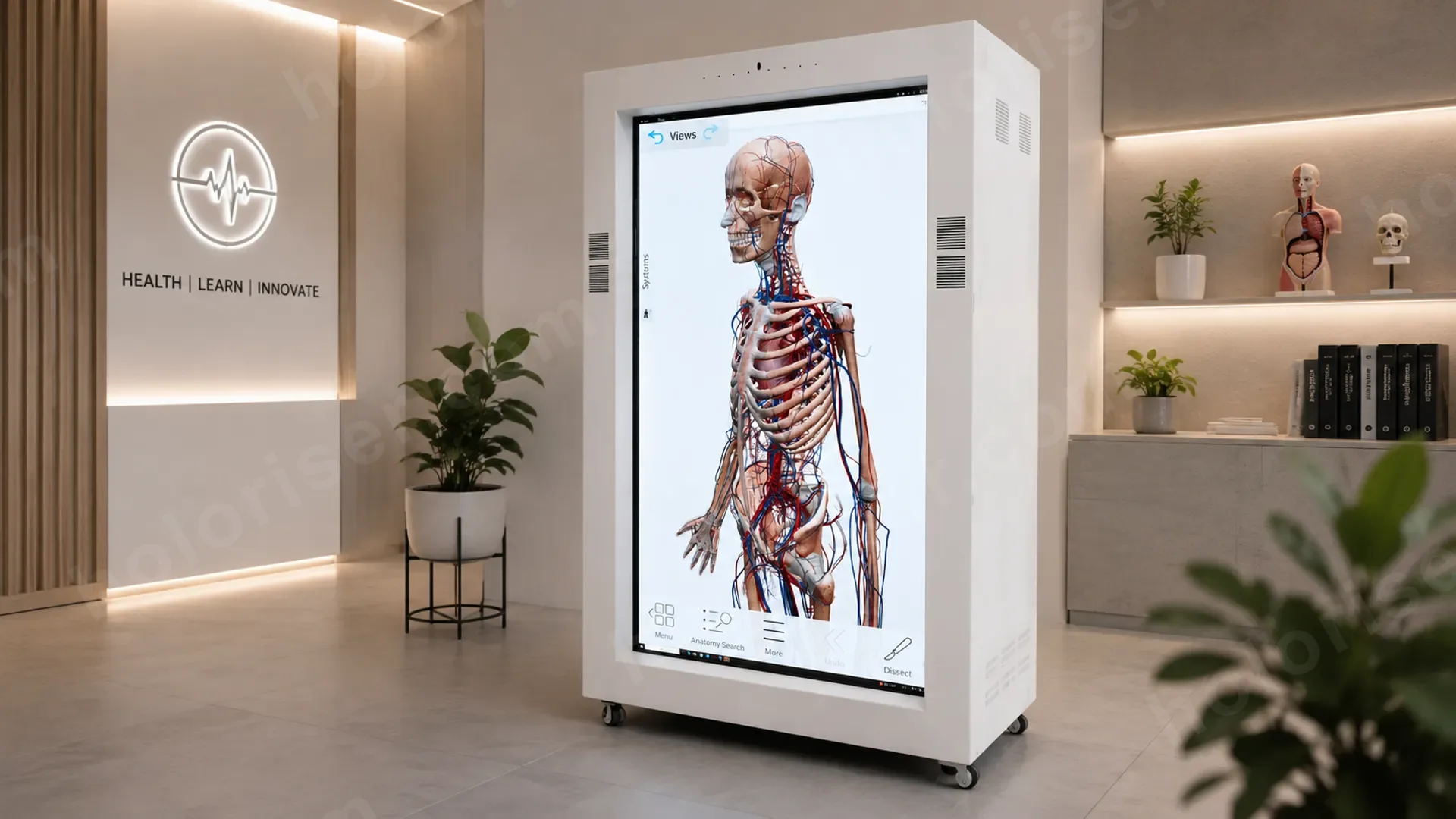
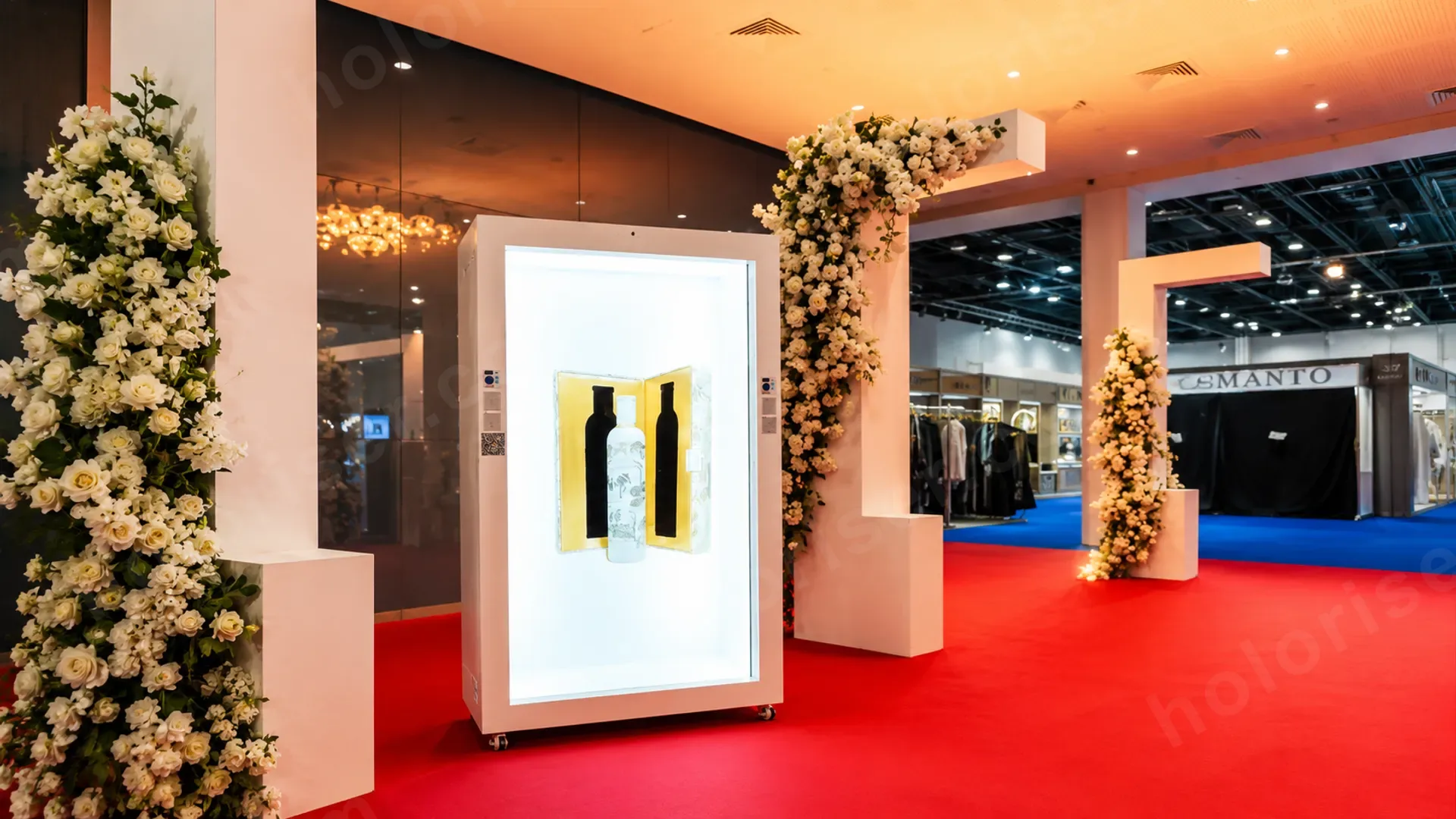
On stands and in lobbies this is usually done with a Holobox: a cabinet about 222 cm tall with a transparent 4K screen in 75" or 86", which shows an adult at close to real size.
On stage it's done with stage hologram systems in front of a seated audience.
The difference is distance. Visitors walk up to a Holobox and talk to it. An audience watches a stage from their seats.
Option 1: filmed video of a real person
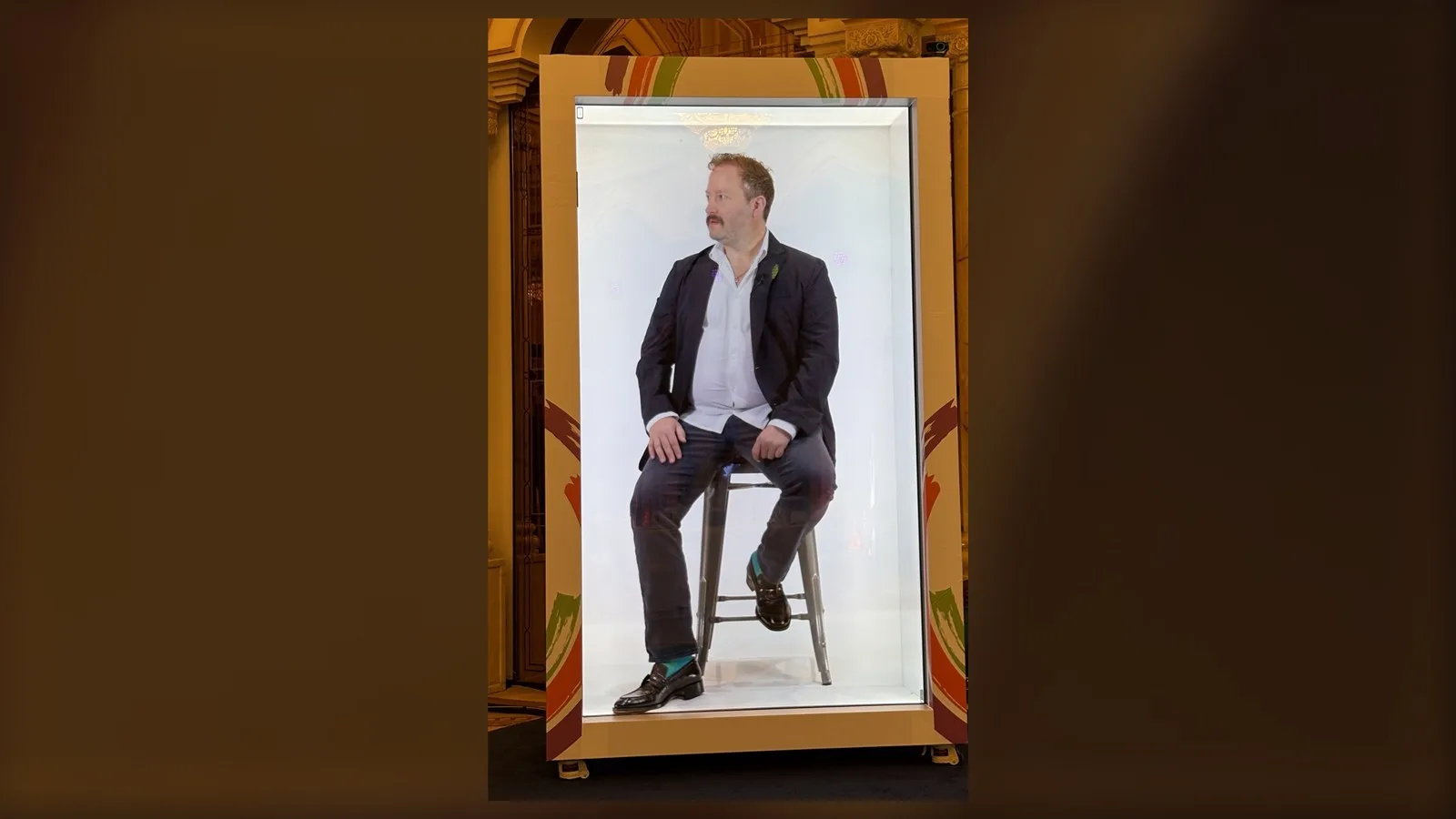
We film the person head to toe against a uniform background, then play the video inside the Holobox so they appear to be standing there.
It's the fastest and most realistic option, because what visitors see is the person themselves, with their own movement and voice.
But it only plays what was recorded. It can't answer a question or greet a visitor, and any change to the message means a new shoot.
It suits a welcome message from an executive, or a product introduction with a fixed message.
Option 2: a live stream from anywhere in the world
Instead of a recording, the person can appear inside the Holobox live while they're in another country.
In September 2026, at a scientific meeting for a global pharmaceutical company in Abu Dhabi, the speaker appeared at life size inside a Holobox on stage while actually being in Toronto, Canada, in front of a room full of doctors.
This solves the problem of a speaker who can't travel, or a schedule that doesn't allow them to attend, without losing the feeling that they're in the room.
What it needs: a strong, stable internet connection at both ends, the speaker filmed full-body against a uniform background where they are, a full rehearsal at least a day before, and a backup recorded video in case the connection drops.
For the technical side, read Putting a Remote Keynote Speaker on a Dubai Stage as a Hologram.
Option 3: a virtual double of a real person
Here we start from footage of the person, but build a character from it that can be programmed. On the Fujairah Digital Government stand at GITEX 2025 we built a realistic host from footage of one of the entity's own staff.
She appeared on an 86" Holobox, welcomed visitors, asked quiz questions in Arabic and English, and told each participant their result.
The advantage is a familiar face the organisation has approved, with content that changes without reshooting.
It can also be connected to AI to answer questions. It's the strongest choice when a specific person's presence is part of the message, such as a spokesperson or a company founder.
It always needs the person's written consent to use their image and voice, including for how long and where.
Option 4: a 3D character
We design the character from scratch: features, clothing, movement and voice. For SHRM MENA 25 in Dubai we built a realistic 3D character of Khalid Al-Harbi in full Saudi dress, who welcomed visitors, ran the quiz and congratulated the winners.
We've also built Emirati characters that aren't tied to any real person, like Ahmed for Dubai Charity Association, and the virtual policeman who answers visitors' questions and pulls data from back-end systems.
This is the most flexible option. The character speaks several languages, works every day without anyone needing to be there, and what it says can be updated at any time.
It's the basis of any AI hologram assistant. We explain how it's built step by step in AI Hologram Avatars: How a Talking 3D Character Is Built.
The comparison in brief
- Realism: filmed video and live streaming come first because they are the person themselves, then the virtual double, then the 3D character, though realistic characters are now very close.
- Interaction: recorded video doesn't interact. A live stream is as interactive as the speaker. A virtual double or a 3D character can run a quiz or answer questions.
- Changing content: filmed video needs a new shoot. A live stream changes with what the speaker says. The other two are updated in the system.
- Internet: only the live stream depends on a strong, stable connection throughout the event.
- Approvals: any option that uses a real person needs their consent. A designed character only needs identity sign-off.
Tips if you decide to film
- Film the full body with the camera in portrait, leaving room above the head and below the feet.
- Use a uniform background and even lighting without harsh shadows.
- Avoid clothes in the background colour, and very fine patterns that flicker on screen.
- Have the person look into the camera at eye level, because the visitor will be standing right in front of them.
- Write the script in advance and keep it short. 30 to 60 seconds is enough for a welcome.
The takeaway: which one to choose
Choose filmed video if you have a fixed message from a specific person, for one occasion.
Choose a live stream if the real speaker can't attend and you want them talking to the room in real time.
Choose a virtual double if the face itself matters and you want it to interact with visitors or change what it says.
Choose a 3D character if you want a daily presence that speaks several languages, without being tied to a real person.
In every case, the Holobox is what makes the person look like they're standing in front of you rather than playing on a screen.
That's why it's the most requested format for human holograms in Dubai. If you're comparing devices, read Holobox vs Hologram Fan.
Browse our hologram solutions in Dubai or hologram rental in Dubai.
If you have a person or an idea in mind, send us who you want to appear, where, and for whom, and we'll suggest the right approach.